Ella Neruda studying abroad in Copenhagen, Denmark.
Where paths meet: Columbus State to Ohio State

At 17, Ella Neruda didn’t have an exact plan for college, and she had barriers most of her peers didn’t face. She also switched majors more than average.
At first, Neruda wanted to become a doctor. Then a nurse, occupational therapist and psychologist.
“Everything about my journey was nonlinear,” Neruda says. “But my dad calls it ‘directionally correct’ when you figure out what you're passionate about and go toward that.”
Now that she has found it, Neruda has remained focused on pursuing her passion: empowering disabled and autistic individuals like herself. She wants to make systems more accessible, particularly in healthcare, higher education and the social work profession, by creating environments that give all people the chance to thrive.
As she navigates personal health challenges, she is working to reach this goal at her own pace. By May 2027, Neruda is on track to complete her bachelor’s degree, with a minor in disability studies, at The Ohio State University College of Social Work.
“I didn't know there were autistic social workers before I came to Ohio State,” Neruda says. “People need to understand what is possible.”

Neruda with Nisonger Center colleagues.
Finding the right direction
For Neruda, who would have then been overwhelmed by a big campus, becoming a Buckeye began at Columbus State Community College. Smaller classes, dedicated faculty and strong disability services made it an ideal starting point.
After being encouraged many times to take a social work class, Neruda finally did. When she learned about macro social work, an advocacy-based approach to making improvements at the systems level — thanks to a dynamic professor, Angela Fry, MSW, LISW-S — she began to see how her lived experience could become professional purpose.
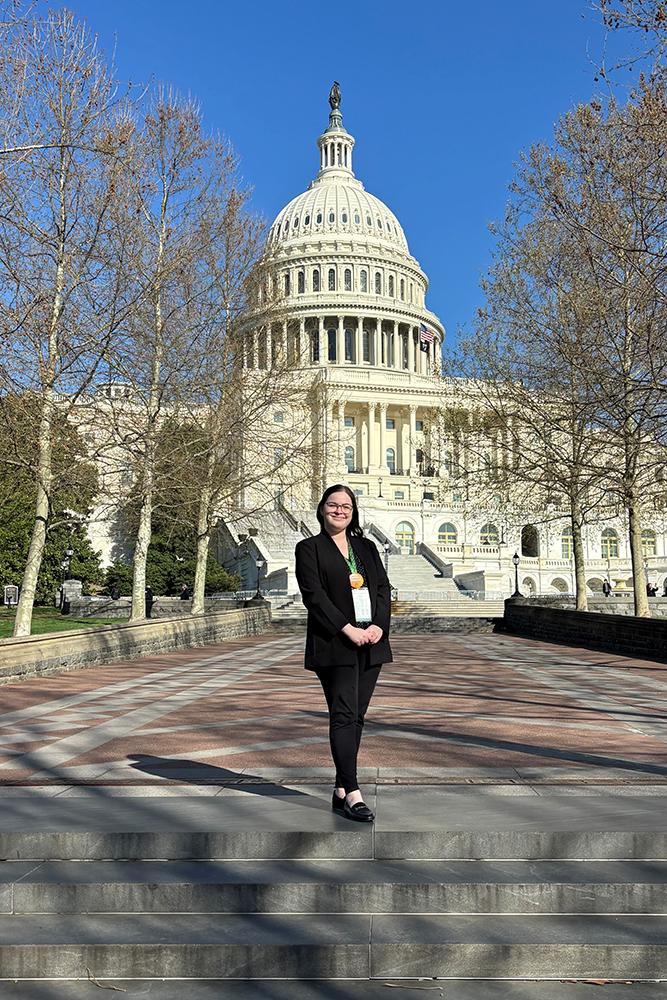
Neruda in Washington, D.C., for a disability policy seminar.
“Angela’s energy, the way she spoke about social issues, was all new to me,” Neruda says. “By my second class I had fallen head over heels for social work.”
After earning a debt-free associate’s degree in psychology at Columbus State, Neruda transitioned directly into Ohio State’s social work program — a move made far less daunting by the same committed professor who initially sparked her interest in social work. Fry also serves as an Ohio State lecturer.
“Having a familiar face, the face that recognized and encouraged my budding interest in macro advocacy, was comforting and helped me cope with a major life change,” Neruda shares.
Seemingly endless opportunities
At 23, Neruda was excited by all the new pathways presented by a place as expansive as Ohio State.
A scholarship allowed her to say “yes” to studying abroad. “Going to Copenhagen, Denmark, to explore universal healthcare had been a dream of mine for four years,” Neruda says.
“With the cost mostly covered, I was able to do everything I wanted with money I had saved, including trying different foods,” she added. “A braided pastry called a cinnamon social was the best thing I’ve ever tasted.”
Taking a comparative healthcare systems course strengthened her commitment to advocacy. “Another course allowed me to see how education for disabled students is done in Denmark,” Neruda explains.
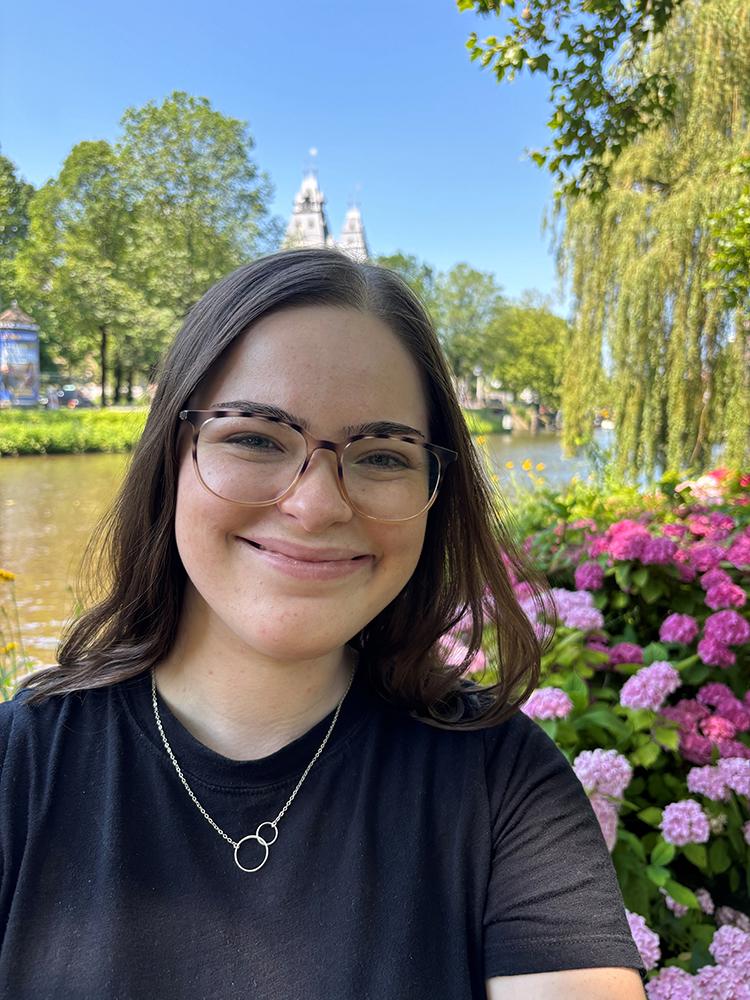
Neruda in Amsterdam, Netherlands, as part of her study abroad travel.
Back in Columbus, Neruda developed her skills as part of a placement with Ohio State’s Nisonger Center. There, she led individual coaching sessions and helped facilitate groups focused on autistic self-advocacy for middle school students and neurodiversity-affirming social skills for older participants.
“As social workers, we aren’t experts who come in and fix our clients’ lives,” says Neruda. “We’re growing right alongside them.”
Neruda also joined Buckeyes for Accessibility, a student-run organization, and went on an advocacy trip with the College of Social Work to Washington, D.C. The trip required months of preparation, writing her own policy brief and going to Capitol Hill, as did a disability policy seminar she also attended.
With guidance from staff, including Kelly Bonice, LSW, a disability services advocate in Ohio State’s Office of Student Life, Neruda is well on her way to achieving her academic aspirations and has completed field work requirements for her degree.
“I'm so glad I went to Columbus State and had all the support I needed through the basics, and then I got to come to Ohio State,” Neruda says. “Here I can go to Denmark, to Capitol Hill — I can join groups. The possibilities feel endless.”
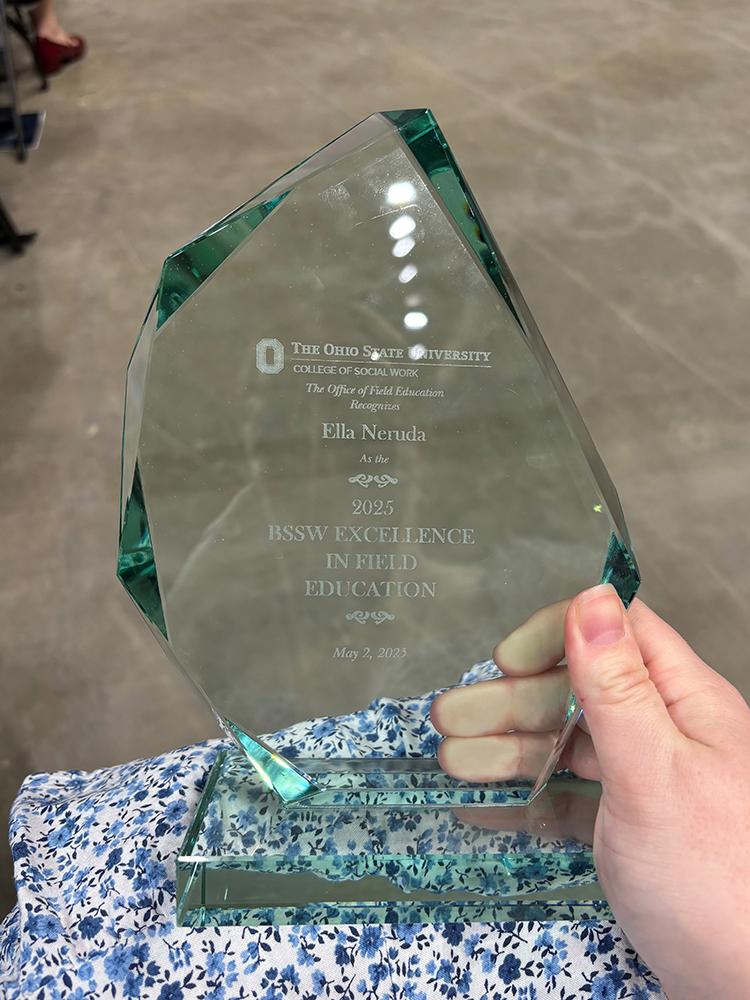
Neruda received an Excellence in Field Education award for her disability advocacy work. She fought for herself and future students to have access to necessary accommodations, resulting in HIPAA-compliant live captioning to use during meetings with social work clients.
Make a difference
Help more social work students like Ella become tomorrow’s change advocates.