Through a variety of initiatives and projects, Ohio State is spreading the spirit of kindness across campus and throughout communities.
Kindness catches on and changes lives
Philanthropy helps spread kindness across campus and communities
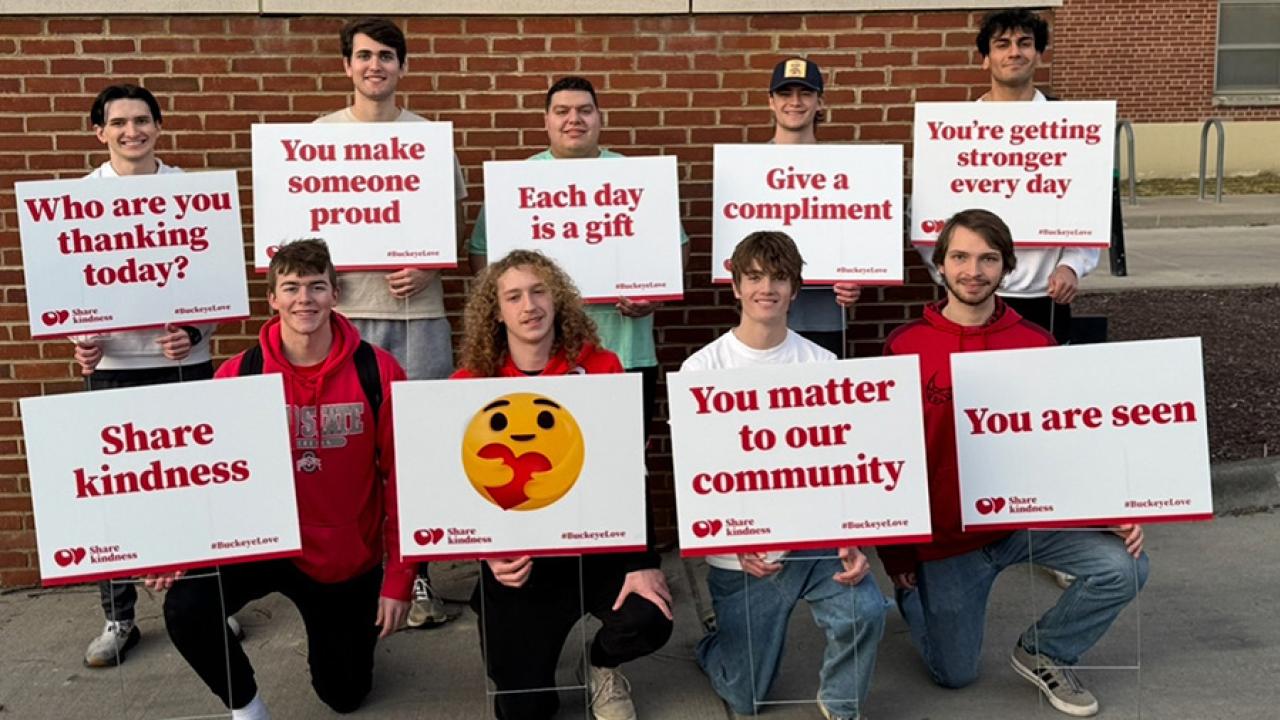
Studies show that simple acts of kindness are a powerful prescription for both personal and public health. Thanks to philanthropy, those acts are multiplying at The Ohio State University and beyond, as donor-driven research and student-led initiatives are converging to create a culture of connection and care.
“When people are being kind, that’s when they are most connected to their communities and other people in their lives,” says Jennifer Cheavens, PhD, professor of clinical psychology at Ohio State. Her research explores how kindness can foster social connection and improve mental health.
“When we first started using kindness as an intervention for people with elevated symptoms of depression and anxiety, I thought we can’t possibly ask people who are suffering to do more for others,” she says. “But the data — ours and others — suggest that not only can we ask people who are depressed or anxious to do kind things for others, but it might help them.”
With generous funding from the Walter Foundation, in collaboration with The Columbus Foundation’s Center for HumanKindness, Cheavens’ team is exploring the cascading effects of kindness and its real-world applications. One study involved 310 random participants in Greater Columbus. Over five weeks, they engaged in acts of kindness — either toward strangers or friends — and were surveyed throughout the process.
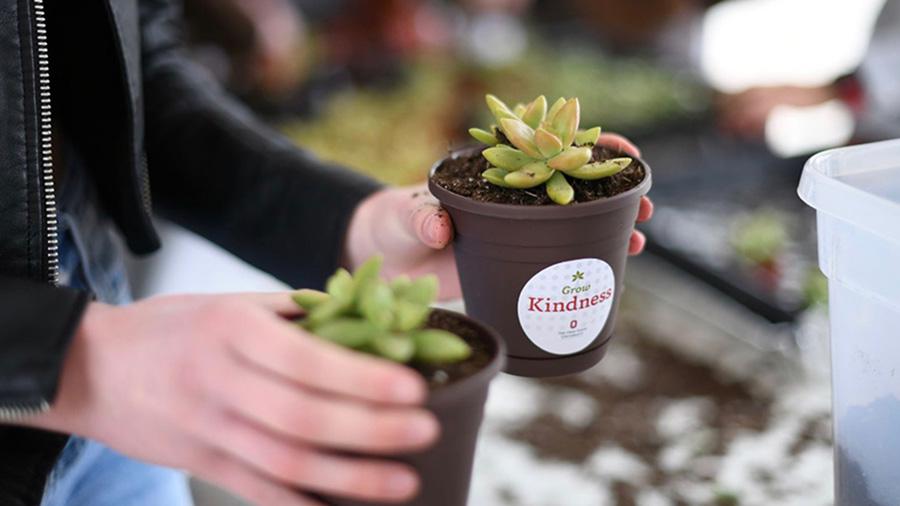
The Grow Kindness plant giveaway offers free succulents at campus locations — one to keep and one to share as a gesture of kindness.
November 13 is World Kindness Day
But the study didn’t stop there. Each participant had to nominate three people in their social network, who were also surveyed. While the numbers are still out, Hana Nip, a research technician on Cheavens’ team, is optimistic about what the results will reveal.
“On average, we’ve had about 1.5 people respond per participant. That’s already a good sign," Nip says. "It shows that people are curious about and engaging with acts of kindness, which might signal that people who are recipients of kindness will go on to do more acts of kindness themselves."
Even without extensive metrics, the impact is clear, with stories of brightened days, renewed hope and meaningful connections.
Creating a culture of kindness
Ohio State’s kindness journey started nearly a decade ago, says Tracy Stuck, director of community partnerships and innovation in the Office of Student Life. Over the years, philanthropic support from the Walter Foundation and others has fueled university kindness initiatives like the annual Be Kind Food Packing event and engagement tools like the Kindness Roadster, a bike that delivers treats and brings joy, and the Kindness Bench that invites conversation.

The Kindness Roadster brings joy wherever it goes. (Photo by Tracy Stuck)
“We started with one food-packing project and thought it would just be for students,” Stuck says. “What we learned is that faculty and staff wanted it just as much. Now, kindness programming brings together students, alumni, staff and the community.”
“The word ‘kindness’ is magic,” Stuck adds. “If we use that word, programs fill up. Students crave it, faculty and staff crave it. We’ve learned that kindness resonates with everyone.”
“If we can make one person who graduates be kinder in the community where they are placed in the world, we know we’ve had a ripple effect.”
Making kindness contagious
The Walter Foundation’s grantmaking focus areas are education, children’s health and well-being and family stabilization. Supporting Ohio State’s kindness research aligns with these pillars as kindness is woven throughout each one, says Nikki Scarpitti, executive director of the foundation.
“The Walters talk about making kindness contagious — using the word ‘contagious’ in the most positive sense,” Scarpitti says. “Kindness is a little squishy; it’s hard to measure. When you can support studies that start to build some credibility, it helps make it more validating.”
Thanks to philanthropic support and local partnerships, Ohio State’s research is creating real-world change. In addition to her research position being funded, Nip is immersed in the community.
One of the most visible ways the kindness study is bridging academic insights with community impact is through a collaboration with The Columbus Foundation’s Center for HumanKindness, says Kate Oliphint, director of the center.
Inspire kindness by sharing your kind experiences, stories and ideas for random acts of kindness with bekind@osu.edu.
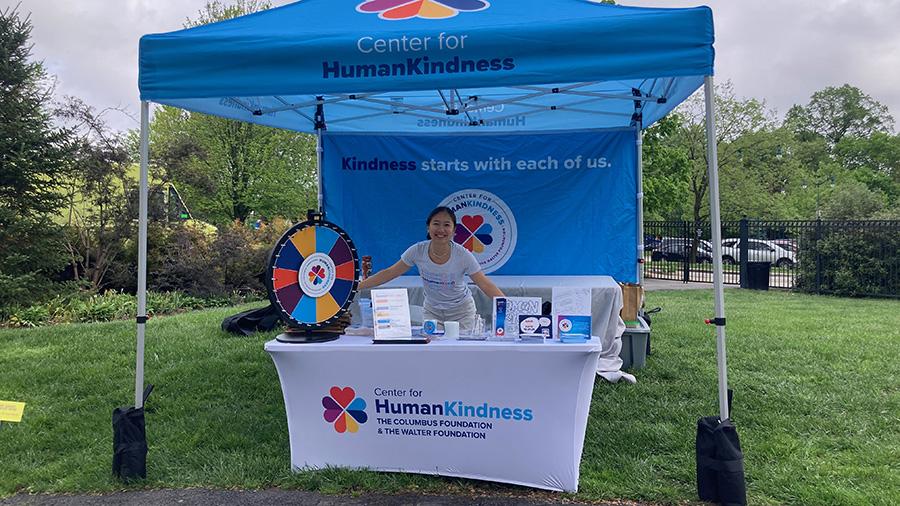
Hana Nip at a community event with the Kindness Wheel, which promotes conversation about kindness.
Together, Nip and Oliphint are translating evidence-based findings into accessible programs and outreach efforts that foster connection, compassion and well-being. Outreach includes promoting study participation, sharing information via social media and newsletters and activating projects to encourage kindness throughout the community.
Initiatives like the Kindness Street Team bring research to life at local events to demonstrate how kindness and social connection improve lives. Interactive activities, such as the Kindness Wheel, prompt people to share stories, donate to nonprofits or support community businesses. One of Nip’s favorites is when people spin the wheel and land on Shop for Good. “We give people a $10 gift card to a business that supports the community, and their purchase helps fund local initiatives,” she says.
These efforts aren’t just about data collection. They are about having real conversations and encouraging people to reflect on the role kindness plays in their lives. “We don’t want this to stay in a journal — we want it to permeate communities,” Oliphint says.
Adds Nip, “I met one of our study participants at a community event. They told me how amazing the experience was — how they went from never talking to strangers to feeling confident and excited to engage with others.”
For Nip, this work is deeply personal. She moved from California to Ohio because she believed in the work — and she’s proud to be part of something that’s academically rigorous and socially impactful.
“It can sometimes feel a little naive, especially with everything happening in the world,” she says. “But it’s still important to focus on improving social connection and spreading kindness, and the support from the Walter Foundation makes this happen.”